

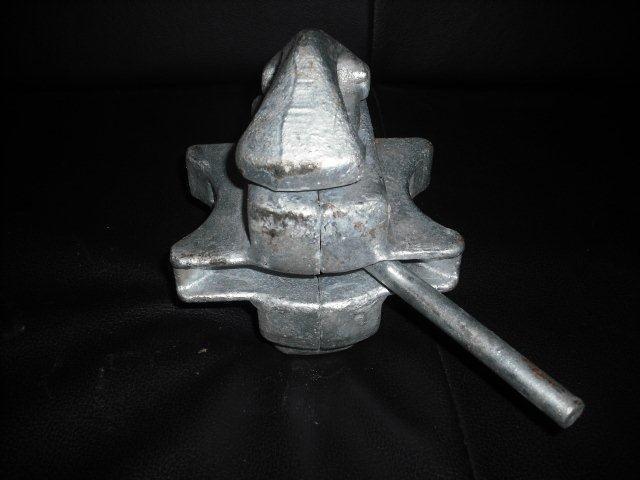
SHIPPING CONTAINERS Twistlocks - Interlocking Cones
Pricing
Prevents a stacked container from blowing away in strong winds!
Twistlocks (often written as twist locks), also known as interlocking cones or stacking cones,
are heavy-duty connectors used to lock two shipping containers together when stacked. They locate through the ISO corner castings and help reduce movement
between containers, making stacked setups more stable and secure in day-to-day site and yard use.
What are shipping container twistlocks?
A shipping container twistlock is a mechanical connector designed to join the corner castings of stacked containers. When correctly fitted, twistlocks help
keep one container aligned on top of another and resist lateral movement. They are widely used in yards, compounds and site setups where containers are stacked
to save space.
Typical use cases
- Stacking containers together when footprint is limited and extra capacity is needed
- Two-high storage stacks in yards, compounds and self-storage operations
- Temporary multi-level layouts for storage, workshops or site equipment areas
- Improved stability in exposed locations by reducing relative movement between stacked units (as part of a sensible overall setup)
For a practical overview of safe stacking, site preparation and key considerations, see our guide:
Stacking Shipping Containers.
Choosing the right containers to stack
If you are planning a stacked setup, 20ft shipping containers
are one of the most common base units due to their standard ISO format and wide availability. Longer units can also be stacked where appropriate, including
40ft shipping containers, provided the stack is planned correctly and
the containers are suitable for stacking.
How many twistlocks do I need?
For a straightforward stack of one container on top of another, you will typically use four twistlocks, one per corner (joining the four corner
castings between the two containers). For multiple levels, you normally need another set for each interface between containers.
Compatibility
Twistlocks are intended for ISO containers with standard corner castings. If you are stacking different sizes, working with modified units, or planning
an unusual layout, speak to our team so we can advise on a suitable approach for your setup.
Fitting overview
Exact fitting depends on twistlock type, but the general process is to position the connectors in the correct corner castings, align the upper container carefully,
then engage the locking mechanism so the connector cannot be withdrawn. Always confirm all corners are properly seated and secured before using the stack.
Important safety notes
Stacking containers should be planned and carried out by competent persons using appropriate lifting equipment and site controls. Always consider ground conditions,
foundations and level, wind exposure, and the condition of the containers being stacked (especially older or modified units). For best practice guidance, refer to:
Stacking Shipping Containers.
Related links
- 20ft shipping containers
- Guide: stacking shipping containers
- 40ft shipping containers
- Container accessories and extras
FAQ
Can you stack shipping containers on top of each other?
Yes. Standard ISO shipping containers are designed with corner castings that allow them to be stacked and secured using connectors such as twistlocks or stacking cones.
Can I stack two 20ft shipping containers together?
Yes. Stacking two 20ft containers is a common use case. Twistlocks connect the corner castings to help reduce movement between stacked units. See our
20ft shipping containers.
Are twistlocks the same as stacking cones?
In everyday use, the terms are often used interchangeably for connectors placed between stacked containers. There are different designs (locking and non-locking),
so it is worth checking the product type if you have a specific requirement.
Do twistlocks stop containers moving in strong winds?
Twistlocks help by mechanically linking stacked containers together through the corner castings, reducing relative movement between units. They should be used as part
of a safe overall setup that considers site conditions, ground level and wind exposure.